
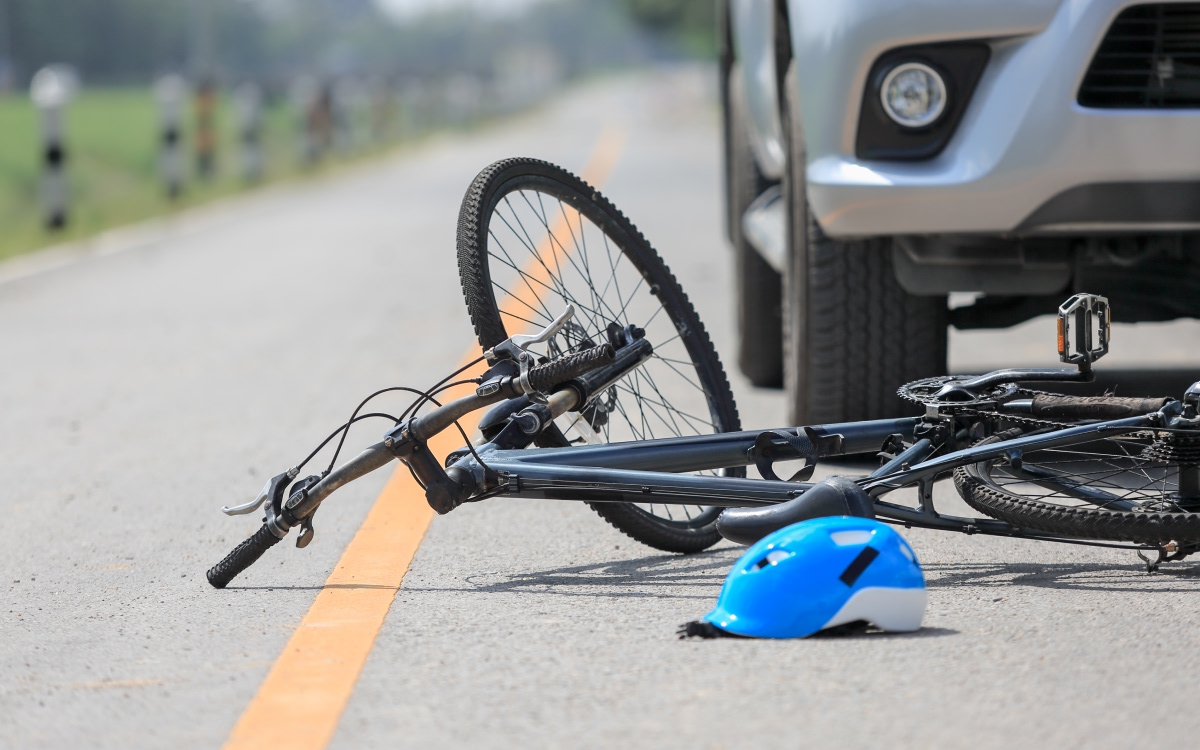
You’re riding your bike to work, exercising on a scenic route, or simply enjoying a ride around your neighborhood. Without warning, a driver opens their car door directly in your path. Or fails to yield while turning left. Or passes too closely, forcing you off the road. In an instant, you’re thrown from your bike, struck by a vehicle, and seriously injured.
Bicycle accidents are among the most devastating traffic collisions, cyclists have zero protection against two-ton vehicles traveling at high speeds. Head trauma. Broken bones. Spinal injuries. Road rash. Internal bleeding. Weeks or months in the hospital. The inability to work. Medical bills exceeding $100,000. And insurance companies that immediately look for ways to blame you.
Insurance companies respond predictably: they blame the cyclist for not wearing bright clothing, for being in the roadway, for not riding defensively. They minimize permanent injuries. They pressure victims to settle quickly for pennies on the dollar.
At Foglia & Associates, we’ve represented bicycle accident victims throughout Massachusetts for over 25 years. Attorney Michael Foglia and Attorney Radu Brestyan (former Middlesex County prosecutor) understand how to prove driver negligence, overcome insurance company blame tactics, and recover maximum compensation for devastating cyclist injuries.
Your bicycle accident case can’t wait, evidence disappears every day. Let us fight for you.
WHAT COMPENSATION CAN I RECOVER AFTER A MASSACHUSETTS BICYCLE ACCIDENT?
Bicycle accident injuries are typically severe, your compensation must reflect the full impact on your life.
Economic Damages (Verifiable Financial Losses)
Medical Expenses:
Emergency Treatment:
- Ambulance transport
- Emergency room treatment ($10,000-$30,000+)
- CT scans, MRIs, X-rays
- Hospital stays
- Emergency surgery
Ongoing Medical Care:
- Follow-up appointments
- Specialists (orthopedic, neurologists, pain management)
- Physical therapy (often many months)
- Occupational therapy
- Mental health counseling
- Dental reconstruction
Future Medical Costs:
- Additional surgeries
- Long-term rehabilitation
- Assistive devices (wheelchairs, prosthetics)
- Home health care
- Life care plans for catastrophic injuries
Lost Wages and Lost Earning Capacity:
- Time missed from work during recovery
- Reduced earning ability from permanent disabilities
- Complete inability to work
- Lost benefits
- Lifetime earning capacity loss
Property Damage:
- Bicycle replacement or repair
- Damaged equipment (helmet, clothing, accessories)
- Other personal property
Out-of-Pocket Expenses:
- Prescription medications
- Medical equipment
- Home modifications
- Vehicle modifications
- Transportation to medical appointments
Non-Economic Damages (Quality of Life Losses)
Pain and Suffering:
- Physical pain from injuries
- Ongoing chronic pain
- Emotional distress
- Mental anguish
Loss of Enjoyment of Life:
- Inability to cycle recreationally or for exercise
- Impact on hobbies and activities
- Reduced quality of life
- Loss of independence
Permanent Disfigurement:
- Road rash scarring
- Facial injuries
- Amputation
- Psychological impact
Loss of Consortium:
- Compensation to spouse for loss of companionship
- Impact on marital relationship
Don’t let insurance companies minimize your bicycle accident injuries. We prove your case deserves maximum compensation.

WHAT SHOULD I DO IMMEDIATELY AFTER A BICYCLE ACCIDENT?
Actions taken in the first minutes and hours determine both medical outcome and legal recovery.
- Seek Emergency Medical Treatment
- Call 911 or have someone call:
- Tell paramedics You were struck by vehicle while cycling, all symptoms you are experiencing, and pre existing conditions
- Report Accident to Police
- Police report is critical evidence:
- Preserve Evidence at Scene (If Able)
- Document everything: Photographs of the Vehicle that struck you (damage, license plate), Your bicycle (damage shows impact severity), Your visible injuries
- Your Equipment: Keep the damaged bicycle, Keep torn clothing, Keep damaged helmet. These prove impact severity.
- Get Witness Information
- Witnesses prove what happened: Names and phone numbers, Addresses, What they saw, Where they were when accident occurred
- Obtain Driver Information
If conscious and able get Driver’s name and contact, Insurance company and policy number, Vehicle registration, Driver’s license number, Photos of driver’s documents
- Do NOT Admit Fault
Any statements will be used against you.
- Follow All Medical Advice
Critical for health and legal case. Treatment gaps can harm your case.
- Do NOT Give Recorded Statements
Insurance adjusters will call you.
What they want: Get you to minimize injuries, accept fault, or make contradictory statements.
What to say: “I need to speak with an attorney before giving any statement.”
Evidence disappears rapidly, immediate attorney involvement is critical.
FREQUENTLY ASKED QUESTIONS ABOUT MASSACHUSETTS BICYCLE ACCIDENT CASES
1. How much does it cost to hire a bicycle accident lawyer?
Nothing upfront. Contingency fees, no fees unless we win. Typically 33⅓% if settled before trial, 40% if trial. If we don’t recover compensation, you owe nothing.
2. How long do I have to file a lawsuit?
Generally 3 years from injury date (M.G.L. c. 260, § 2A). Claims against municipalities require 30-day notice. Consult an attorney immediately to ensure deadlines are met.
3. Can I recover compensation if I wasn’t wearing a helmet?
Yes. Massachusetts only requires helmets for riders under 16. Adult cyclists ride without helmets legally. Helmet use doesn’t prevent driver negligence or eliminate liability.
4. What if I was partially at fault?
Massachusetts modified comparative negligence allows recovery if you’re not more than 50% at fault. Damages reduced by your fault percentage. If 20% are at fault, you recover 80% of damages.
5. What if the driver says I “came out of nowhere”?
This is a common insurance defense we routinely overcome through witness testimony, accident reconstruction, and proof the driver was distracted or not keeping proper lookout.
6. Can I sue if the driver was in a bike lane?
Absolutely. Drivers should not be in bike lanes. Improper lane use establishes liability.
7. What about “dooring” accidents?
Driver liability. Massachusetts law requires drivers to check for approaching cyclists before opening doors. Dooring creates clear driver negligence.
8. How do you prove the driver was at fault?
Through police reports, witness statements, surveillance video, accident reconstruction, traffic signal data, bike damage analysis, and expert testimony.
9. What if I was hit by a city bus or government vehicle?
You can sue government entities, but 30-day notice requirement applies. We handle municipal liability claims.
10. Will I have to go to trial?
Most cases settle. However, trial preparation is often necessary to force fair settlement. We’re fully prepared to try your case if needed.
11. Can I sue if the driver had no insurance?
Yes, through your own uninsured motorist (UM) coverage. We fight your insurance company to recover full compensation.
12. What if my bike was damaged?
Property damage is compensable. Bicycle replacement or repair costs are included in your claim.
13. How long does a case take?
6-12 months for simpler cases. 18-36 months for complex cases requiring extensive treatment, municipal claims, or trial.
14. What if I violated a traffic law?
Even if you violated traffic law (ran stop sign, no lights), you may still recover if the driver’s negligence was greater. Massachusetts modified comparative negligence applies.
15. How do you calculate pain and suffering?
Based on injury severity, treatment duration, permanency, impact on daily life, and future effects. More serious injuries result in higher awards.