
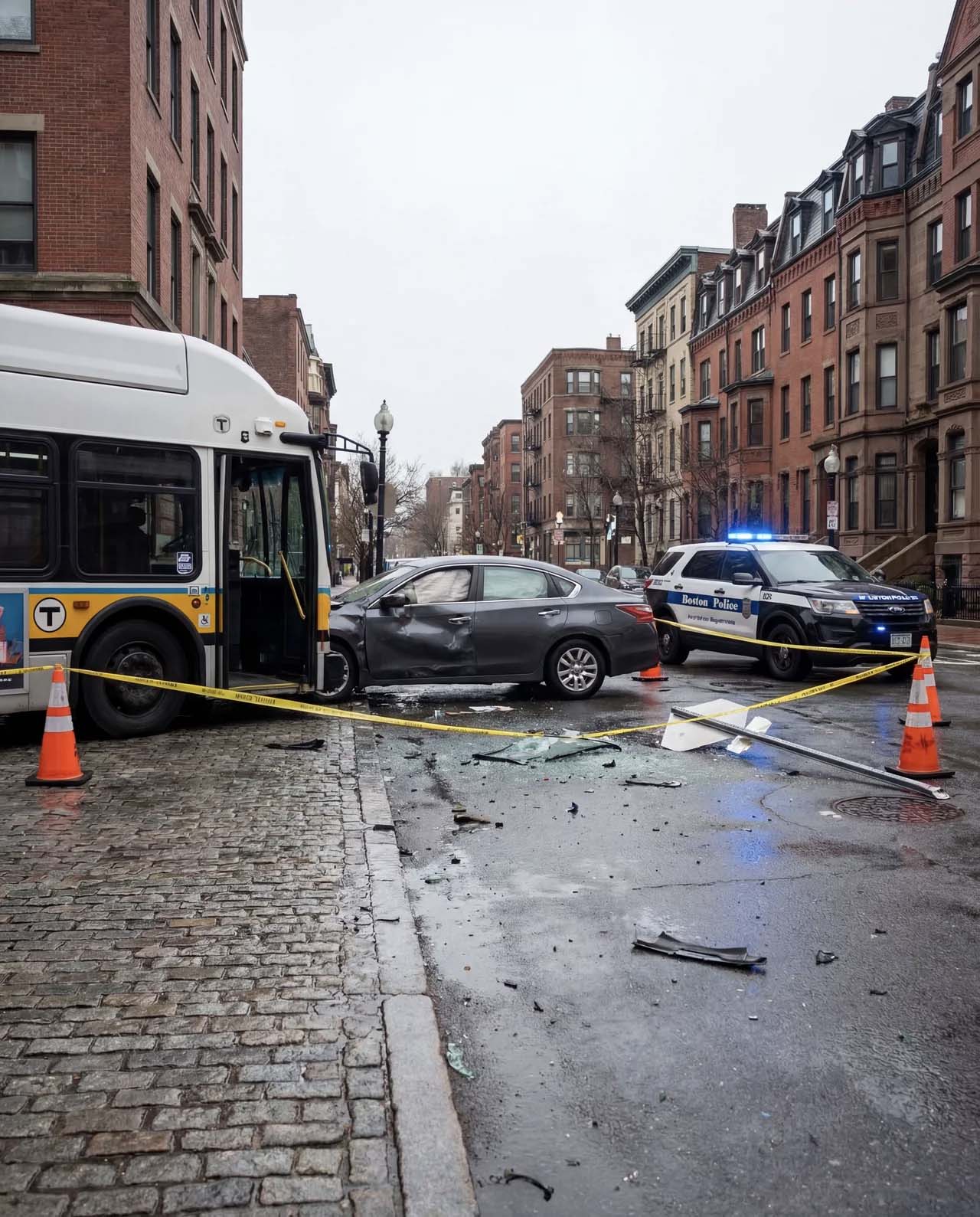
When a bus accident happens, the consequences can be devastating. Whether you were a passenger on an MBTA bus, a motorist struck by a charter bus, a pedestrian hit at a bus stop, or a child injured on a school bus, you deserve justice and full compensation for your injuries. Bus accidents often result in multiple victims, catastrophic injuries, and complex legal challenges that require experienced representation.
At Foglia & Associates, our bus accident lawyers have spent over 25 years fighting for victims throughout Massachusetts. We understand the unique complexities of bus accident cases, from navigating governmental immunity with MBTA claims to holding private charter companies accountable. Our team includes former Middlesex County prosecutor Attorney Radu Brestyan, giving us valuable insight into how these cases are investigated and prosecuted.
We handle every type of bus accident case on a contingency fee basis, you pay nothing unless we win.
If you or a loved one has been injured in a bus accident, time is critical. Evidence disappears quickly, and Massachusetts imposes strict deadlines for claims against public transportation authorities.

Most Common Causes of Bus Accidents in Massachusetts
Bus accidents don’t just happen, they’re caused by specific failures in driver behavior, vehicle maintenance, company oversight, or infrastructure design. Understanding what causes bus accidents is crucial to holding the right parties accountable and preventing future tragedies.
- Driver Negligence and Error
The bus driver is the first line of safety, and when drivers make mistakes or engage in negligent behavior, the consequences affect everyone on board and everyone sharing the road. Common forms of driver negligence include:
Distracted Driving: Despite strict regulations against cellphone use, texting while driving remains a persistent problem. Distracted driving was estimated to be involved in more than 289,000 traffic fatalities in a single year (NHTSA). Distracted driving also includes eating, drinking, adjusting controls, interacting with passengers, or simply daydreaming during long routes.
Driver Fatigue and Overwork: Federal regulations limit how long bus drivers can operate without rest, but violations occur regularly. Tired drivers have slower reaction times, make poor decisions, and can even fall asleep at the wheel.
Speeding and Aggressive Driving: Pressure to maintain schedules can lead drivers to speed, especially on highway routes. Large buses require significantly longer stopping distances than passenger cars, making speeding particularly dangerous.
Impaired Driving: While rare, incidents of intoxicated bus drivers do occur. 37% of fatal bus crashes involved alcohol (NHTSA). Drug use, prescription medication side effects, and alcohol consumption all impair driver ability.
Failure to Check Blind Spots: Buses have massive blind spots around all sides of the vehicle. Drivers who fail to properly check mirrors before changing lanes, turning, or pulling away from stops can strike vehicles, cyclists, or pedestrians they never saw.
Improper Turning: Left-turn crashes are particularly common with buses. The wide turning radius required means buses often swing into adjacent lanes or cut corners, striking vehicles, pedestrians, or cyclists.
Failure to Yield: Bus drivers sometimes assume their size gives them right-of-way. Running red lights, failing to yield at intersections, and not stopping for pedestrians in crosswalks can all lead to serious accidents.
- Vehicle Maintenance Failures
Buses require rigorous maintenance schedules due to their heavy use and large size. When bus companies or public agencies fail to properly maintain their fleets, mechanical failures can cause devastating crashes:
Brake Failures: Tire Blowouts: Steering and Suspension Problems: Defective Equipment:
- Road and Infrastructure Issues
Massachusetts roads present unique challenges for bus operations. Potholes, uneven pavement, crumbling infrastructure, and inadequate road maintenance can cause buses to lose control or strike passengers during sudden jolts. The state has responsibility for maintaining safe roadways, and failures can create municipal liability.
- Company Negligence
Bus companies and transportation authorities bear responsibility for the overall safety of their operations. Drivers need comprehensive training on vehicle operation, defensive driving, emergency procedures, and passenger safety. Companies that cut corners on training put everyone at risk.
- Passenger-Related Incidents
While less common, accidents can also involve passenger behavior:
Assaults on Drivers, Unsafe Boarding and Alighting, Defective Buses and Equipment, Design Defects, Manufacturing Defects:
Understanding the cause of your bus accident is essential to identifying all liable parties and building a strong case for compensation. Many bus accidents involve multiple causes and multiple responsible parties, which is why thorough investigation by experienced attorneys is crucial.
FREQUENTLY ASKED QUESTIONS ABOUT BUS ACCIDENT CASES IN MASSACHUSETTS
1. How much does it cost to hire a bus accident lawyer?
Nothing upfront. We work on contingency, charging 33⅓% if the case settles before trial or 40% if it goes to trial. We advance all expenses including expert fees, investigation costs, and court filing fees. You owe nothing if we don’t recover compensation.
2. What is the statute of limitations for bus accident claims in Massachusetts?
You have three years from the accident date to file a lawsuit under M.G.L. c. 260, Section 2A. However, critical notice deadlines apply much sooner: 30 days written notice to municipalities under M.G.L. c. 84, and two years written presentment to the MBTA. Missing these deadlines can permanently bar your claim. Contact an attorney immediately.
3. Can I sue the MBTA if their bus injured me?
Yes, but special requirements apply. You must send written notice (called a “presentment”) to the MBTA’s executive officer within two years under M.G.L. c. 258, Section 4. After providing presentment, you have three years from the accident to file your lawsuit. These requirements are complex and strictly enforced, so consult an attorney immediately.
4. What if I was partially at fault for the bus accident?
Massachusetts follows modified comparative negligence under M.G.L. c. 231, Section 85. You can recover compensation if less than 51% at fault, with your recovery reduced by your fault percentage. If you’re 51% or more at fault, you cannot recover anything. Insurance companies will exaggerate your fault to reduce payment.
5. How long does a bus accident case take to resolve?
Simple cases with clear liability might settle in 6-12 months. Complex cases involving catastrophic injuries, multiple defendants, or disputed liability often take 18-36 months or longer. MBTA and municipal cases can take longer due to governmental processes. Cases going to trial add additional time.
6. What if the bus driver says the accident wasn’t their fault?
The driver’s statements don’t determine liability, evidence does. Our investigation examines police reports, witness statements, bus company records, driver history, maintenance records, black box data, surveillance footage, and physical evidence. We retain accident reconstruction experts when necessary to establish fault.
7. Can I sue if I was a passenger on the bus when it crashed?
Yes. As a passenger, you typically bear no fault for the accident. The bus company or MBTA owes passengers the highest duty of care as a common carrier. You can recover compensation for all injuries, medical expenses, lost wages, and pain and suffering. Paying a fare doesn’t affect your right to compensation.
8. What if a school bus hit my car?
You can pursue compensation for injuries, property damage, and other losses. Liability may rest with the bus driver, school district, or private bus company contracted by the school. Claims against school districts require 30-day municipal notice under M.G.L. c. 84. Compensation includes vehicle repairs, medical expenses, lost wages, and pain and suffering.
9. How do I prove the bus company was negligent?
We investigate driver hiring and training practices, hours-of-service compliance, vehicle maintenance records, federal and state regulation violations, corporate safety policies, past accidents, and driver qualifications. We obtain evidence through formal discovery including personnel files, training records, maintenance logs, federal inspection reports, and internal communications. Expert witnesses analyze this evidence.
10. What compensation can I receive for bus accident injuries?
Compensation includes economic damages (medical expenses, lost wages, future medical care, reduced earning capacity, property damage) and non-economic damages (pain and suffering, emotional distress, loss of enjoyment, disfigurement, loss of consortium). Minor to moderate injuries typically result in $25,000 to $150,000 settlements. Serious injuries settle for $150,000 to $2,000,000. Catastrophic injuries can result in $2,000,000 to $30,000,000 or more.
11. What if the bus driver fled the scene?
Gather as much information as possible: photographs, license plate, route information, witness statements, and surveillance footage. Report to the police immediately. For MBTA buses, bus number and route help identify the vehicle and driver. Your uninsured/underinsured motorist coverage may provide compensation if the bus cannot be identified.
12. Can I sue if I was injured getting on or off the bus?
Yes. Bus companies and the MBTA have duties to provide safe boarding and exiting conditions including safe steps, handrails, adequate lighting, warning of hazards, and protection from traffic. Common accidents include slip and falls on steps, doors closing on passengers, passengers struck by traffic, and falls due to sudden bus movement.
13. What if the bus accident caused a pre-existing injury to get worse?
Massachusetts follows the “eggshell plaintiff” rule, meaning defendants must take victims as they find them. You can recover compensation for worsening of pre-existing conditions, even if someone without the condition would have suffered less injury. Medical experts can evaluate records and testify about how much the accident exacerbated your condition.
14. How much is my bus accident case worth?
Case value depends on injury severity and permanence, medical expenses, lost wages, pain and suffering, impact on quality of life, disfigurement, clarity of liability, and available insurance coverage. We provide valuations after reviewing medical records, understanding full injury extent, investigating liability, and identifying compensation sources. Initial guesses are usually inaccurate.
15. What if the bus accident happened because of poor road conditions?
You may have claims against the government entity responsible for road maintenance. Potential claims include potholes, inadequate signage, defective traffic signals, poor road design, inadequate lighting, and debris in the roadway. Claims against municipalities require 30-day written notice under M.G.L. c. 84. We handle complex road defect cases and navigate procedural requirements.