
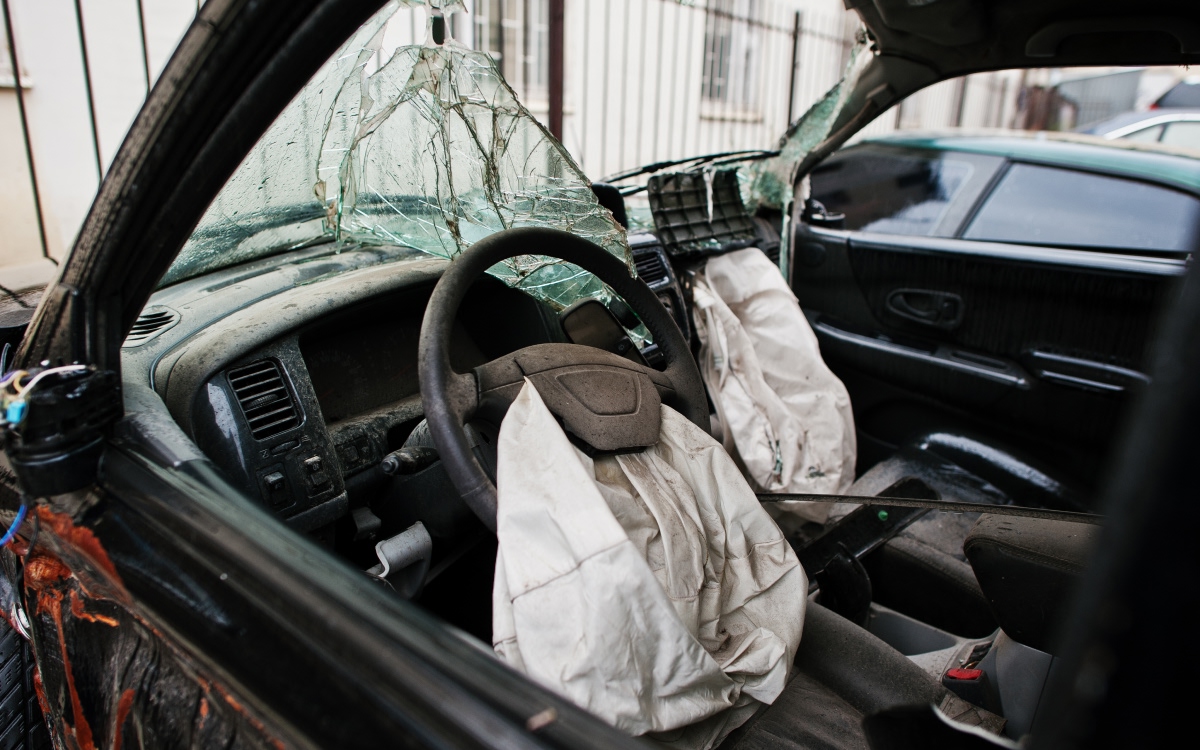
A car accident can happen in an instant, one moment you’re driving to work, running errands, or picking up your kids, and the next, your life is turned upside down by the crash of metal, the deployment of airbags, and the shock of impact. Massachusetts saw over 100,000 reported car crashes, resulting in 328 fatalities and thousands more serious injuries in a single year. Nearly 100,000 motor vehicle crashes occurred across the state, with 357 fatalities, each one representing a family forever changed.
If you’ve been injured in a car accident in Framingham or anywhere in Massachusetts, you’re probably dealing with pain, medical bills, lost wages, and insurance companies that seem more interested in protecting their bottom line than helping you recover. You didn’t ask for this, someone else’s negligence caused your injuries, and you deserve compensation for what you’re going through.
At Foglia & Associates, we’ve spent over 25 years fighting for car accident victims throughout Massachusetts. We know how to deal with insurance companies, prove liability, and maximize your compensation so you can focus on healing. While Massachusetts has the lowest traffic fatality rate per capita in the entire United States (4.9 deaths per 100,000 people compared to the national average of 12.2), any car accident is one too many when it happens to you or your family.

What Should I Do Immediately After a Car Accident in Framingham?
The moments and hours following a car accident are critical, not just for your health and safety, but also for protecting your legal rights and building a strong insurance claim. Here’s exactly what you need to do:
Step 1: Check for Injuries and Call 911
Your health is the absolute top priority. Even if you feel “fine” immediately after the crash, call 911. Adrenaline masks pain, and many serious injuries, like internal bleeding, traumatic brain injuries, concussions, and spinal injuries, don’t show symptoms right away.
Step 2: Move to Safety If Possible
If your vehicle is drivable and you’re not seriously injured, move it out of the flow of traffic to prevent additional collisions. If you can’t move your vehicle, turn on your hazard lights and stay inside with your seatbelt fastened if traffic is still moving around you.
If you’re on a busy road like Route 9, I-90 (Mass Pike), I-495, or Route 20 and can’t safely exit your vehicle, wait for police and emergency responders.
Step 3: Never Admit Fault or Apologize
This is absolutely critical: Do not apologize, admit fault, or say anything like “I’m sorry” or “I didn’t see you.” Even polite apologies can be twisted by insurance companies to suggest you’re admitting responsibility for the accident.
Stick to the facts when talking to the other driver and police.
Step 4: Document Everything
If you’re physically able, gather as much evidence as possible while still at the scene:
Photograph:
- All vehicles involved from multiple angles
- Visible damage to all vehicles
- The overall accident scene
- Skid marks, debris, and road conditions
- Traffic signs, signals, and lane markings
- Your visible injuries
- The other driver’s license plate
- The intersection or location where the crash occurred
Video footage can also be valuable, especially for showing the full context of the scene.
Step 5: Get Information From Everyone Involved
Collect information from all drivers involved:
- Full name and contact information
- Driver’s license number
- Insurance company and policy number
- Vehicle make, model, year, and license plate
- Vehicle Identification Number (VIN) if visible
Step 6: Identify and Interview Witnesses
Witnesses are crucial because they provide independent, unbiased accounts of what happened. Get contact information from anyone who saw the accident. Witnesses often leave before police arrive, so gathering this information yourself is essential.
Step 7: Call the Police and Get a Report Number
Even if the accident seems minor, it’s smart to call the police. A police report creates an official record and can be crucial evidence for your insurance claim. Make sure to get the police report number before leaving the scene.
Step 8: Seek Immediate Medical Attention
Go to the emergency room or see a doctor the same day, even if you feel okay. Many serious injuries don’t show symptoms immediately.
Seeing a doctor immediately creates a medical record linking your injuries to the accident. If you wait days or weeks, insurance companies will argue your injuries weren’t caused by the crash or aren’t serious.
Step 9: Report the Accident to Your Insurance Company
Massachusetts law requires you to report the accident to your own insurance company promptly. However, be careful about what you say, stick to basic facts: date, time, location, vehicles involved.
Your own insurance company may seem friendly and helpful, but remember that they’re still a business trying to minimize payouts.
Step 10: Don’t Talk to the Other Driver’s Insurance Company
The at-fault driver’s insurance adjuster will likely contact you within 24-48 hours. They’ll sound sympathetic and concerned, but their goal is to get information they can use to deny or minimize your claim.
Politely decline to give a recorded statement and tell them you’ll be consulting with an attorney. You have every right to do this, and it’s a smart move.
Step 11: Keep Detailed Records
From day one, keep copies of everything related to your accident and injuries:
- All medical records and bills
- Police reports
- Photos and videos
- Witness statements
- Correspondence with insurance companies
- Receipts for accident-related expenses (rental car, medications, medical equipment)
- A daily journal documenting your pain, symptoms, and how injuries affect your life
Step 12: Contact a Car Accident Lawyer
The sooner you contact an experienced car accident attorney, the better. We can:
- Deal with insurance companies on your behalf
- Investigate the accident and gather evidence
- Obtain police reports and witness statements
- Work with medical providers to document your injuries
- Calculate the full value of your claim
- Negotiate for maximum compensation
- File a lawsuit if necessary
At Foglia & Associates, we handle everything so you can focus on recovering.
How Much Is My Car Accident Case Worth in Massachusetts?
One of the first questions car accident victims ask is: “How much is my case worth?” The answer depends on multiple factors unique to your situation, but understanding what damages are available helps you appreciate the full value of your claim.
Economic Damages (Financial Losses)
Economic damages are the quantifiable financial losses you’ve suffered and will continue to suffer:
Medical Expenses: This includes all past and future medical costs related to your accident injuries. Emergency room treatment and ambulance transport, hospital stays and surgeries, doctor appointments and specialist care, physical therapy and rehabilitation, chiropractic care, prescription medications, medical equipment (wheelchair, walker, braces, crutches), home health care or nursing care, future medical treatment for permanent injuries
Lost Wages: You’re entitled to compensation for income you’ve lost due to your injuries. If you’re self-employed, calculating lost income requires documenting your typical earnings and showing how the accident affected your ability to work.
Loss of Earning Capacity: If your injuries prevent you from returning to your previous job or from earning the same income, you can recover damages for reduced earning capacity.
Property Damage: Your vehicle damage is compensable.
Non-Economic Damages (Pain and Suffering)
Non-economic damages compensate for subjective losses that don’t have clear dollar values:
Pain and Suffering: This includes physical pain and discomfort from your injuries.
Emotional Distress: The psychological impact of the accident and injuries.
Loss of Consortium: If you’re married, your spouse can recover damages for the loss of companionship, affection, intimacy, and household services resulting from your injuries.
Disfigurement and Scarring: Permanent visible scars or disfigurement that affects your appearance and self-esteem are compensable.
Available Insurance Coverage: Massachusetts requires minimum auto insurance coverage of $20,000 per person and $40,000 per accident for bodily injury liability. Many drivers carry higher limits ($50,000/$100,000, $100,000/$300,000, or more). Your recovery is limited by available insurance coverage unless the at-fault driver has significant personal assets.
Why Choose Foglia & Associates for Your Car Accident in Framingham?
Car accident cases may seem straightforward, but insurance companies have sophisticated tactics to deny or minimize claims. You need an experienced attorney who knows how to fight back.
Over 25 Years of Car Accident Experience
Since Attorney Michael Foglia founded our firm in 1999, we’ve represented hundreds of car accident victims throughout Massachusetts. We’ve seen every type of collision, rear-end accidents, T-bone crashes, head-on collisions, multi-vehicle pileups, and we know how to prove liability and maximize compensation.
Former Prosecutor’s Advantage
Attorney Radu Brestyan’s experience as a former Middlesex County Assistant District Attorney gives us unique insight into how opponents build their cases and scrutinize evidence. This knowledge helps us anticipate insurance company tactics and build stronger cases for our clients.
We Deal With Insurance Companies So You Don’t Have To
Insurance adjusters contact car accident victims within hours of the crash, hoping to get recorded statements that hurt their claims or pressure them into accepting lowball settlements. When you hire us, all communication goes through our office. We handle the insurance companies while you focus on healing.
Comprehensive Damage Calculation
We work with medical experts, economists, and vocational specialists to accurately calculate. Insurance companies routinely undervalue claims. We ensure you receive full compensation for all your losses.
Contingency Fee Basis
We work on a contingency fee basis, which means:
- You pay no hourly fees or retainers
- You pay nothing out of pocket for case expenses
- We only get paid if we recover compensation for you
- Our fee comes from the recovery, not your pocket
This arrangement ensures everyone can afford quality legal representation after a car accident.
Local Knowledge of Framingham and MetroWest
Our office is located at 340 Union Ave # 1, Framingham, MA 01702, and we’re intimately familiar with:
- High-accident areas in Framingham (Route 9, Route 126, Route 30, Concord Street)
- Local police departments and their accident investigation procedures
- MetroWest courts and judges
- Common accident patterns in the area
We represent car accident victims throughout Massachusetts, including:
- Framingham and MetroWest
- Worcester and Worcester County
- Boston and Cambridge
- Milford and Marlborough
- Malden and Everett
- Lawrence and the Merrimack Valley
- All other Massachusetts communities
FREQUENTLY ASKED QUESTIONS ABOUT CAR ACCIDENTS IN MASSACHUSETTS
1. Do I really need a lawyer for a “minor” car accident?
Even minor accidents can cause injuries with delayed symptoms like whiplash, herniated discs, or concussions. Insurance companies have teams of lawyers protecting their interests, and studies show represented victims receive significantly higher compensation than those handling claims themselves. We work on contingency, so you pay nothing unless we recover compensation. There’s no financial risk to professional representation.
2. What if the other driver doesn’t have insurance?
Your Uninsured Motorist (UM) coverage pays what the at-fault driver should have paid, up to your UM policy limits. All Massachusetts auto policies must include UM coverage equal to your liability coverage unless you rejected it in writing. You can also sue the uninsured driver directly, though collecting may be difficult without assets.
3. How long do I have to report the accident to my insurance company?
Report as soon as possible, ideally within 24 hours. Most policies require “prompt” notice, and delays can jeopardize coverage. Stick to basic facts: date, time, location, vehicles involved, and that you were injured. Before giving detailed recorded statements, consult an attorney.
4. What if I was partially at fault for the accident?
Massachusetts follows modified comparative negligence, allowing recovery if you were 50% or less at fault. Your compensation is reduced by your fault percentage. If you’re 51% or more at fault, you cannot recover anything. Insurance companies exaggerate fault to reduce payouts, making attorney representation crucial.
5. Should I accept the insurance company’s first settlement offer?
Almost never. First offers are typically lowball offers made before you fully understand injury extent or claim value. Once you accept and sign a release, you typically cannot reopen your claim if injuries worsen. Many serious injuries don’t fully manifest for weeks or months. Never accept without consulting an attorney.
6. What is the “serious injury threshold” in Massachusetts?
Massachusetts’ no-fault system limits lawsuits for pain and suffering, but you can sue if injuries result in death, loss of body member, permanent disfigurement, loss of sight or hearing, fracture, OR medical expenses exceeding $2,000. Meeting either threshold allows lawsuits for full damages including pain and suffering and complete lost wages.
7. How much is my car accident case worth?
Value depends on injury severity and permanence, liability clarity, your age and occupation, medical expenses and lost wages, quality of life impact, and available insurance coverage. Minor soft tissue injuries might settle for $5,000 to $25,000. Catastrophic injuries like traumatic brain injury or spinal cord damage can be worth $500,000 to $5,000,000 or more. Massachusetts doesn’t cap damages.
8. What if my injuries don’t show up until days or weeks after the accident?
This is very common. Adrenaline masks pain, and many injuries like whiplash, herniated discs, and traumatic brain injuries have delayed symptoms. See a doctor immediately even if you feel fine. If symptoms develop later, see a doctor right away and explain they started after the accident. Prompt medical documentation linking symptoms to the accident is essential.
9. Can I still make a claim if I didn’t call the police?
Yes, but it’s more difficult without a police report. Police reports provide official records including officer observations, driver statements, witness information, and sometimes fault determination. Without a report, you can still build a strong case with photos, witness statements, medical records, and detailed accounts. File an accident report with the RMV within 5 days if anyone was injured or property damage exceeded $1,000.
10. What should I do if the other driver’s insurance company wants a recorded statement?
Politely decline and consult an attorney first. Insurance adjusters ask questions designed to hurt your case, even innocent questions like “How are you feeling?” Recorded statements are permanent and can be used against you throughout your case. Before giving any statement, consult an attorney who can protect your rights.
11. Will my insurance rates go up if I file a claim?
In Massachusetts, insurance companies cannot raise rates if you were 50% or less at fault. If more than 50% at fault, rates may increase. Filing a PIP claim typically doesn’t increase rates because PIP is no-fault coverage. Don’t let rate concerns stop you from making a claim, compensation received will likely far exceed any premium increase.
12. Can I handle my own car accident claim without a lawyer?
You can, but it’s usually a mistake for anything beyond minor fender-benders with no injuries. Studies show represented victims receive settlements 3 to 4 times higher on average than unrepresented claimants. Insurance companies make lowball offers knowing most people don’t understand claim values. We work on contingency, so there’s no downside to professional representation.
13. What if the accident happened while I was using my phone or violating a traffic law?
You may still recover compensation. Massachusetts’ comparative negligence rule allows recovery if you were 50% or less at fault, even if you violated traffic laws or were distracted. Your compensation is reduced by your fault percentage. Never admit violations without consulting an attorney first, as experienced lawyers can minimize your comparative fault percentage.
14. Is it ok to post about my accident on social media?
Absolutely not. Don’t post anything about your accident, injuries, or case on any platform. Insurance companies monitor social media and use posts against you. A smiling photo proves “you’re not in pain,” a grocery store post proves “injuries don’t limit activities.” Say nothing on social media until your case is resolved. Don’t accept friend requests from unknown people.
15. What happens if the at-fault driver dies in the accident?
You can still pursue a claim against the deceased driver’s estate and insurance policy. The insurance policy remains in effect and pays valid claims up to policy limits. If the estate goes through probate, you may need to file a claim in probate proceedings. This is complex, so consult an attorney experienced in both car accidents and probate.