
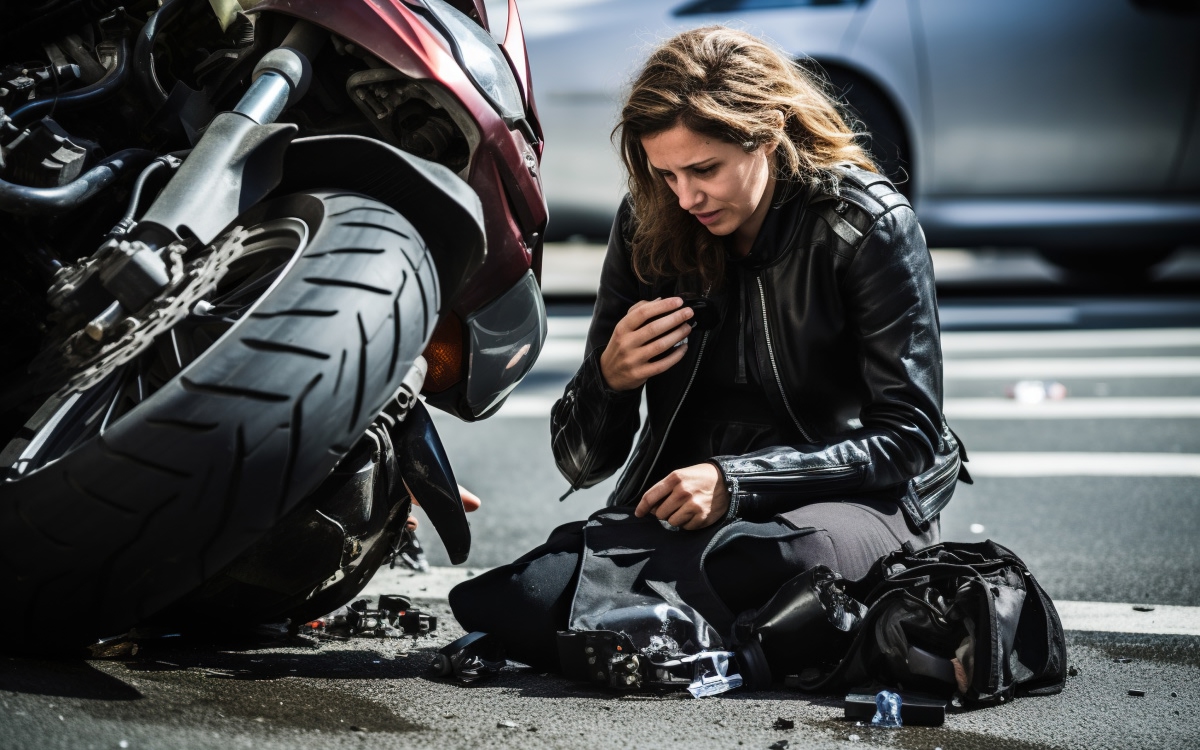
Riding a motorcycle through Massachusetts offers a sense of freedom that few experiences can match. But that freedom comes with devastating vulnerability. When a car driver fails to see you, makes an illegal turn, or simply doesn’t give you the respect you deserve on the road, the consequences can be catastrophic, life-changing injuries, mounting medical bills, lost wages, and insurance companies determined to pay you as little as possible.
At Foglia & Associates, we fight for motorcyclists. For over 25 years, Attorney Michael Foglia and Attorney Radu Brestyan and their legal team of paralegals, investigators and experts have represented injured riders throughout Massachusetts, in compensation for medical bills, lost wages, pain and suffering, and permanent disabilities. We understand the unique challenges motorcyclists face, both on the road and in the legal system, and we know how to win.
Whether you were struck by a left-turning car, forced off the road, hit by a door opening into traffic, or injured in any other motorcycle crash in Framingham or anywhere in Massachusetts, you have rights. We’re here to protect them.
The Two Most Common Fatal Crash Types in Massachusetts
According to MassDOT data, two scenarios dominate motorcycle fatalities:
1. Left-Turning Vehicle Strikes Motorcycle
The classic “I didn’t see you” crash. A car making a left turn across traffic strikes an oncoming motorcycle. The driver either:
- Failed to look properly
- Looked but didn’t see the motorcycle (unintentional blindness)
- Misjudged the motorcycle’s speed and distance
According to research, 41% of serious motorcycle injuries occur at intersections, and left-turning vehicles are the primary culprit.
2. Single-Vehicle Crashes (Rider Fails to Negotiate Curve)
These crashes often involve:
- Excessive speed for road conditions
- Inexperienced riders on unfamiliar roads
- Poor road maintenance (gravel, potholes, uneven pavement)
- Adverse weather conditions
While these are classified as “single-vehicle” crashes, road defects and maintenance failures often contribute, and may create liability for municipalities or highway departments.
Framingham’s Unique Motorcycle Accident Risks
Framingham sits at the intersection of major routes including Route 9, Route 30, Interstate 90 (Mass Pike), and Interstate 495. This creates specific dangers for motorcyclists:
- High-volume commuter traffic during rush hours with distracted, impatient drivers
- Complex intersections along Route 9 and Route 30 with multiple turning movements
- Suburban shopping areas with frequent parking lot exits and drivers focused on finding spaces rather than checking for motorcycles
- Construction zones particularly along I-90 and local road improvement projects
- Seasonal hazards including:
- Spring potholes from freeze-thaw cycles
- Summer heat causing tire blowouts and road surface deterioration
- Fall leaves creating slippery surfaces
- Early season riders returning after winter layoffs with rusty skills

WHAT SHOULD I DO IMMEDIATELY AFTER A MOTORCYCLE ACCIDENT IN MASSACHUSETTS?
The actions you take in the first minutes and hours after a crash significantly impact your ability to recover compensation.
Step 1: Ensure Safety and Call 911
If you can phisically move safely:
- Get out of traffic to avoid being struck again
- Turn on hazard lights if bike is operational
- Don’t remove your helmet immediately (unless necessary for breathing)
Call 911 immediately: If you are safely able:
- Report the accident
- Request police and ambulance
- Stay on scene until officers arrive
Step 2: Seek Medical Attention
Go to the emergency room or see a doctor the same day, even if you feel “fine”:
Step 3: Document the Accident Scene
If you’re physically able (or have a passenger/witness help):
Photograph:
- Your motorcycle from all angles
- The other vehicle(s) from all angles
- Street signs, traffic signals, road conditions
- Skid marks, debris field
- Your visible injuries
- Weather conditions
- Position of vehicles
Video:
- Pan the entire accident scene
- Record your verbal description of what happened
Get Witness Information
Step 4: Exchange Information (But Say Little)
Be polite but say as little as possible about the accident itself.
Step 5: Talk to Police Carefully
When police arrive:
- Answer factual questions honestly
- Describe what happened from your perspective
- Don’t speculate about speed, distance, or fault
- Don’t minimize injuries – tell officer you’re injured and seeking treatment
Remember: Police reports often contain errors or make fault determinations based on incomplete information. An incorrect police report can be challenged with evidence.
Step 6: Notify Your Insurance Company (Carefully)
You must report the accident to your motorcycle insurance company:
- Call to report the accident occurred
- Provide basic facts (date, time, location, other party information)
- Do NOT give recorded statement without attorney
- Do NOT accept immediate settlement offers
- Do NOT sign any documents without attorney review
Why be careful: Your own insurance company isn’t necessarily on your side. They may try to deny UM/UIM coverage or use your statements against you.
Step 7: Preserve Evidence
Keep everything related to the accident.
Your Motorcycle Accident Case Can’t Wait, Contact Foglia & Associates Today
Every day you wait after a motorcycle crash:
- Evidence disappears
- Insurance companies build their defense against you
- Financial pressure increases
- Deadlines move closer
You need answers now:
- Will I receive fair compensation?
- How do I deal with insurance companies?
- What is my case really worth?
- Can I afford medical treatment while my case proceeds?
- What if the driver had minimal insurance?
At Foglia & Associates, we provide the answers you need and the aggressive representation you deserve.
Don’t let another day pass without protecting your rights.
Insurance companies have teams of lawyers minimizing what they pay injured motorcyclists. Shouldn’t you have an experienced attorney fighting for you?
Foglia & Associates, Fighting for Injured Motorcyclists Throughout Massachusetts
Serving: Framingham, Worcester, Milford, Cambridge, Boston, Malden, Everett, Lawrence, Lowell, and all communities across Massachusetts.
FREQUENTLY ASKED QUESTIONS ABOUT MASSACHUSETTS MOTORCYCLE ACCIDENT CASES
1. Do I need a lawyer for my motorcycle accident case?
You’re not legally required to hire a lawyer, but having representation dramatically increases compensation. Insurance companies pay unrepresented motorcyclists far less, the legal process is complex with critical deadlines, and you need someone to fight anti-motorcycle bias. Studies show injured people with lawyers recover 3 to 4 times more than those without representation, even after attorney fees.
2. How much does it cost to hire a motorcycle accident lawyer?
Nothing upfront. We work on contingency with no consultation fee, no retainer or hourly fees, and we advance all case costs. We only get paid if you win. Our fee is typically 33⅓% before trial, 40% if trial. If we don’t recover compensation, you owe nothing.
3. What if I was partially at fault for my motorcycle accident?
You can still recover under Massachusetts’ comparative negligence law if you’re not more than 50% at fault. Your recovery is reduced by your fault percentage. If you’re 49% at fault, you still recover 51% of damages. If 51% or more at fault, you cannot recover. We fight to minimize your fault percentage.
4. Why don’t motorcyclists get PIP coverage in Massachusetts?
Massachusetts law specifically excludes motorcycles from PIP coverage (M.G.L. c. 90 § 34M). Legislators wanted to keep motorcycle insurance premiums low. This means motorcyclists must rely on health insurance, need optional Medical Payments Coverage (MedPay), need high UM/UIM coverage, and must pursue liability claims to recover medical expenses.
5. How long do I have to file a lawsuit after a motorcycle accident in Massachusetts?
Generally 3 years from the accident date, but shorter deadlines apply in some situations. Claims against government entities often have 2-year limits. Notice requirements for municipal claims can be as short as 30 days. Wrongful death claims have 3 years from date of death. Consult an attorney immediately to ensure all deadlines are met.
6. What if the driver who hit me was uninsured or underinsured?
Uninsured Motorist (UM) coverage steps in when the at-fault driver has no insurance. Underinsured Motorist (UIM) coverage pays the difference when the at-fault driver doesn’t have enough insurance. Without UM/UIM, you can sue the driver personally, but most uninsured/underinsured drivers lack assets to pay judgments.
7. Can I sue if the other driver was drunk?
Absolutely, and you may be entitled to punitive damages beyond standard compensatory damages (medical expenses, lost wages, pain and suffering). Punitive damages punish the drunk driver and deter future drunk driving. You may also have a claim against the bar or restaurant under Massachusetts Dram Shop Law if they served alcohol to a visibly intoxicated person.
8. What if I don’t have health insurance to cover my medical bills?
You have options: Medical Payments Coverage (MedPay) if on your policy, letters of protection where medical providers agree to wait for payment until settlement, hospital charity care programs, and legal representation to coordinate payment arrangements. Don’t skip medical treatment because of cost concerns, untreated injuries worsen and hurt your case.
9. Should I give a recorded statement to the insurance company?
Do NOT give a recorded statement without consulting an attorney first, especially to the at-fault driver’s insurance company. Adjusters request statements to get you to admit fault, minimize injuries, lock you into contradictory versions, and find inconsistencies. Politely tell them you’ll provide a statement after consulting with an attorney.
10. What if my motorcycle was customized or modified?
You’re entitled to full value including custom paint work, performance modifications, aftermarket parts and accessories, sound system upgrades, and custom seats, handlebars, and exhaust. Document modifications with photos before the crash, receipts for parts and labor, and professional appraisals. Insurance companies often undervalue customized bikes.
11. Can I still recover compensation if I wasn’t wearing a helmet?
Massachusetts requires DOT-approved helmets. Not wearing one creates a presumption of comparative negligence, and insurance companies will argue head injuries wouldn’t have occurred with a helmet. However, if injuries don’t involve head trauma, helmet use is irrelevant. Even with head injuries, you can still recover if the other driver was primarily at fault.
12. What if the accident happened in a parking lot?
Parking lot accidents are fully compensable just like road accidents. Massachusetts traffic laws and right-of-way rules still apply. Property owners may be liable for hazardous conditions, and multiple parties may share liability. We investigate thoroughly, including obtaining security camera footage before it’s deleted.
13. How do I prove the other driver was at fault?
Multiple types of evidence prove liability: witness testimony (independent witnesses most valuable), physical evidence (vehicle damage patterns, skid marks, debris field location), documentary evidence (police report, traffic camera footage, security camera footage, dashcam footage), expert analysis (accident reconstructionists, motorcycle crash specialists), and defendant’s own statements (admissions in police report, statements to witnesses). We use all available evidence to build the strongest case.
14. What if I was riding with a passenger who was injured?
Your passenger has a claim against the at-fault driver who caused the crash OR you if you caused it. If you caused the crash, your motorcycle liability insurance covers your passenger’s injuries. If another driver caused the crash, your passenger can file against that driver’s insurance. Complex issues arise when passengers are family or friends.
15. Will my case go to trial?
Most motorcycle accident cases settle before trial, approximately 95% resolve through negotiation. Cases more likely to go to trial involve disputed liability, severe injuries with high damages, low insurance policy limits, unreasonably low insurance offers, or defendant denying involvement. Whether settlement or trial, our goal is maximum compensation.